
This morning started the way a lot of my mornings do lately: coffee, a piece of paper, and a nagging thought I couldn't quite shake.
There's been a growing backlash against AI. Some of it is fair. Some of it is rooted in misunderstanding. And some of it misses the point entirely.
What bothered me enough to put pen to paper was the idea that AI is some kind of alien intelligence or moral shortcut. Something fundamentally different from the tools we've always used in computing. If that idea hardens, it doesn't just hurt the conversation—it reflects poorly on people like me who are using these tools carefully, transparently, and productively.
So I sketched.
Not code. Not prompts. Just ideas. Diagrams. A rough mental model of how AI actually works in a real, practical setting. Less "thinking machine," more "new way to index and retrieve information." A new computer science tool, not a replacement for thinking.
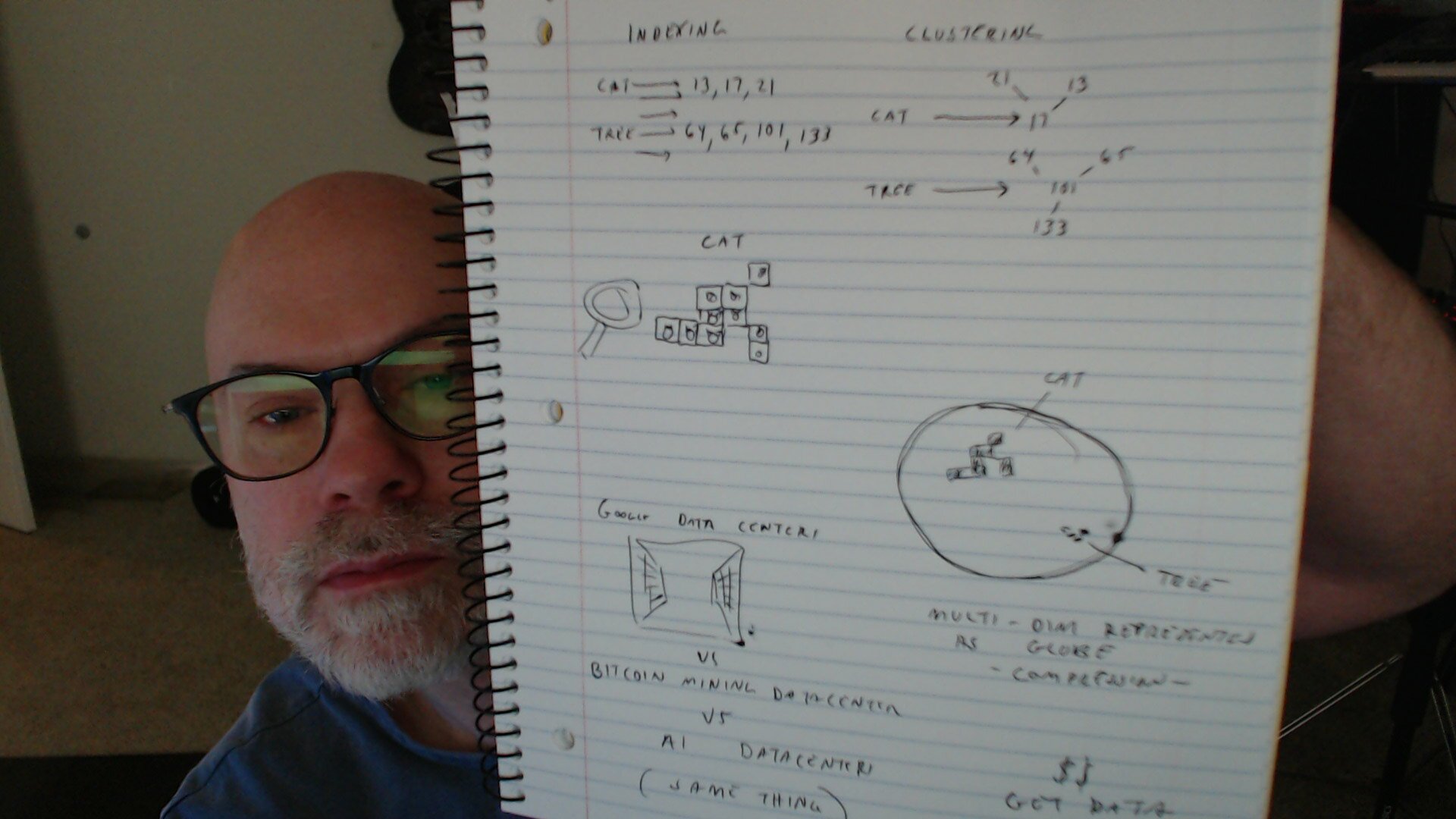
Once I had that sketch, I did something simple but surprisingly useful. I held the paper up to my webcam and took a photo. That captured the moment before the ideas got polished or optimized. The messy, human part of thinking.
From there, I moved upstairs and opened Gemini. I uploaded the photo and asked for help turning those rough sketches into clearer visuals. Not finished slides—just more legible versions of the same ideas. The tool didn't invent the thinking. It helped me see my own thinking more clearly.
Next came the script. Not a word-for-word read, but an outline of what I wanted to say on camera. Enough structure to stay focused, enough flexibility to sound like a human being.
Then came the setup: mic levels, camera framing, deciding how formal or informal to be. I actually don't mind this part—I'm a bit of an audiophile and video guy. Eventually I just hit record and talked.
For about 20 to 30 minutes, I captured my thoughts on video. Stumbles, restarts, and all. I do this deliberately. I want my face out there. I don't want to sound like a robot, because I'm not one. These were my thoughts, and I wanted to share them as such.
The real grind: editing
If you've ever edited your own video, you know how tedious it can be. Saying the same thing multiple times until it sounds right. Cutting long silences. Removing the ums. Watching your own facial expressions more than you'd like. That part took far longer than the recording itself.
Right now, I don't have a polished AI video editing system. What I do have are some early experiments using agents and tools like FFmpeg to handle very mechanical tasks—silence removal, clip ordering, and batch processing.
But while I was editing, I found myself clearly imagining the next step.
The idea is straightforward: take all the raw clips, order them by timestamp, transcribe everything into plain text, and then let an LLM help identify the strongest takes. Not rewriting my words, and not making creative decisions for me—but spotting the cleanest, clearest versions of things I already said. From there, it could propose an edit plan that a tool like FFmpeg could execute.
That tool doesn't exist yet. But it easily could. Maybe tomorrow. Maybe tonight. The important point is that the workflow itself becomes visible once you start thinking this way.
Shipping and context switching
By early afternoon, the video was done. I shared it on LinkedIn and Facebook and started engaging with people around the ideas. I'm still not convinced those are the best channels, but that's a problem for another day.
I also made a couple of fixes to my game, which just launched on Steam. Context switching is part of the job.
Now I'm here writing this newsletter—the third place this idea will live. And I'll make sure this content also exists permanently on my website, not just in inboxes or social feeds.

A question for you
That's a pretty typical day for me now. Not frantic. Not magical. Just focused, iterative work, using tools that remove friction instead of adding it.
So I'll leave you with a question: Are you using the tools available to you in a way that actually multiplies your output without burning you out?
If not, that's literally what I help with now. And I'm happy to talk.
Devin
918.software
Happy to do a quick 10-minute Google Meet if helpful — book here.